Jolene Howard
The Outsider (Stephen King Edition)Jolene Howard is the younger of the two Howard sisters whose murder becomes central to the investigation of Heath Holmes. The evidence presents her chiefly through the sequence of her disappearance and the clues left behind: a school absence shared with her sister Amber, a surveillance image placing her in Holmes’s company, and blond hairs later matched to her in a care-home bathroom.
Identity and Background
Jolene and her older sister Amber lived in a low-income home with an alcoholic mother and an absent father, in a neighborhood the investigators describe as poor. Their school classified them as at-risk students, and they had skipped school on multiple occasions. The account supplies this context while cautioning against blaming the girls for their vulnerability; their circumstances explain the institutional label but do not make them responsible for what happened.
The investigation identifies Jolene as younger than Amber and records the sisters’ close association in their movements that day. On Monday, April 23, at about ten in the morning, Amber had a free period, while Jolene said she needed to use the bathroom. The investigators infer that the sisters probably planned their departure in advance. The detail places Jolene’s disappearance within an ordinary school routine that was turned into an opportunity to leave.
Last Known Movements
A photograph from a gas-station surveillance camera, time-stamped 12:19 p.m. on April 23, shows Holmes returning to a Dayton Landscaping & Pools panel truck with two sodas. Amber is leaning out of the driver’s-side window to take them. Although the image captures Amber rather than Jolene, it establishes that Holmes and the sisters were connected that day and places Amber with him after the earlier school absence.
The vehicle in the photograph was not the Chevy Tahoe a nurse informant had suspected. It was the company panel truck, which investigators said had been stolen on April 14. That correction makes the image part of a wider evidentiary chain: a stolen vehicle, a recorded encounter, and Holmes’s movements during the period surrounding the sisters’ disappearance. Jolene’s precise whereabouts at the moment pictured are not specified.
Evidence and Investigation
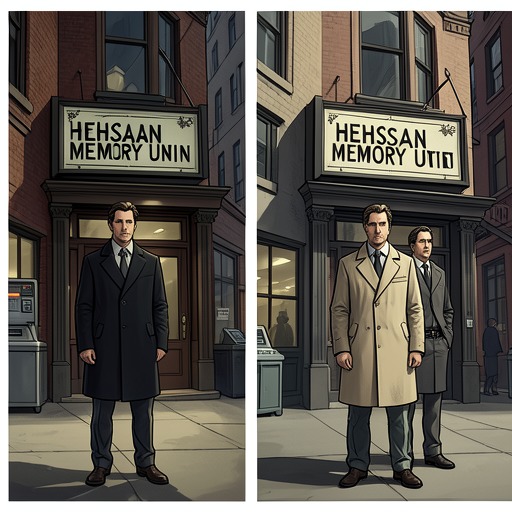
On April 26, Holmes went to the Heisman Memory Unit during his vacation week. He told June Kelly, the woman in charge, that he had come to retrieve something from his locker and intended to check on a couple of patients. Kelly found the explanation and visit unusual: orderlies used plastic cubbies in the break room rather than lockers, and Holmes ordinarily referred to the residents as his guys and gals rather than using the institution’s preferred term.
One of the people Holmes checked on was Terry Maitland’s father. Police later found blond hairs in the man’s bathroom and forensic testing matched them to Jolene. This linked the murdered girl to a place Holmes had visited, while also making the visit’s odd circumstances newly significant. The evidence described in the investigation includes other items associated with the case, but the account does not establish that Jolene herself had any relationship with the care-home resident.
Narrative Significance
Jolene has no narrated perspective in these scenes; readers encounter her through photographs, school records, and forensic traces. A photograph of her and Amber at a carnival shows the sisters smiling with cones of cotton candy, a stark contrast with the investigative account that follows. The image gives them a brief, individual presence beyond the labels applied by adults and institutions, even as the case turns their lives into evidence.
The investigation’s reconstruction also shows how a chain of apparently concrete clues can direct suspicion: the stolen truck, surveillance photographs, and Jolene’s hair at the Heisman Memory Unit. Her story is therefore not only the account of a victim’s disappearance but part of the novel’s inquiry into how evidence accumulates and how investigators interpret it. The supplied material ends with that evidentiary case still being assembled; it does not recount Jolene’s death itself or provide a separate account of her life beyond the events surrounding the murder investigation.